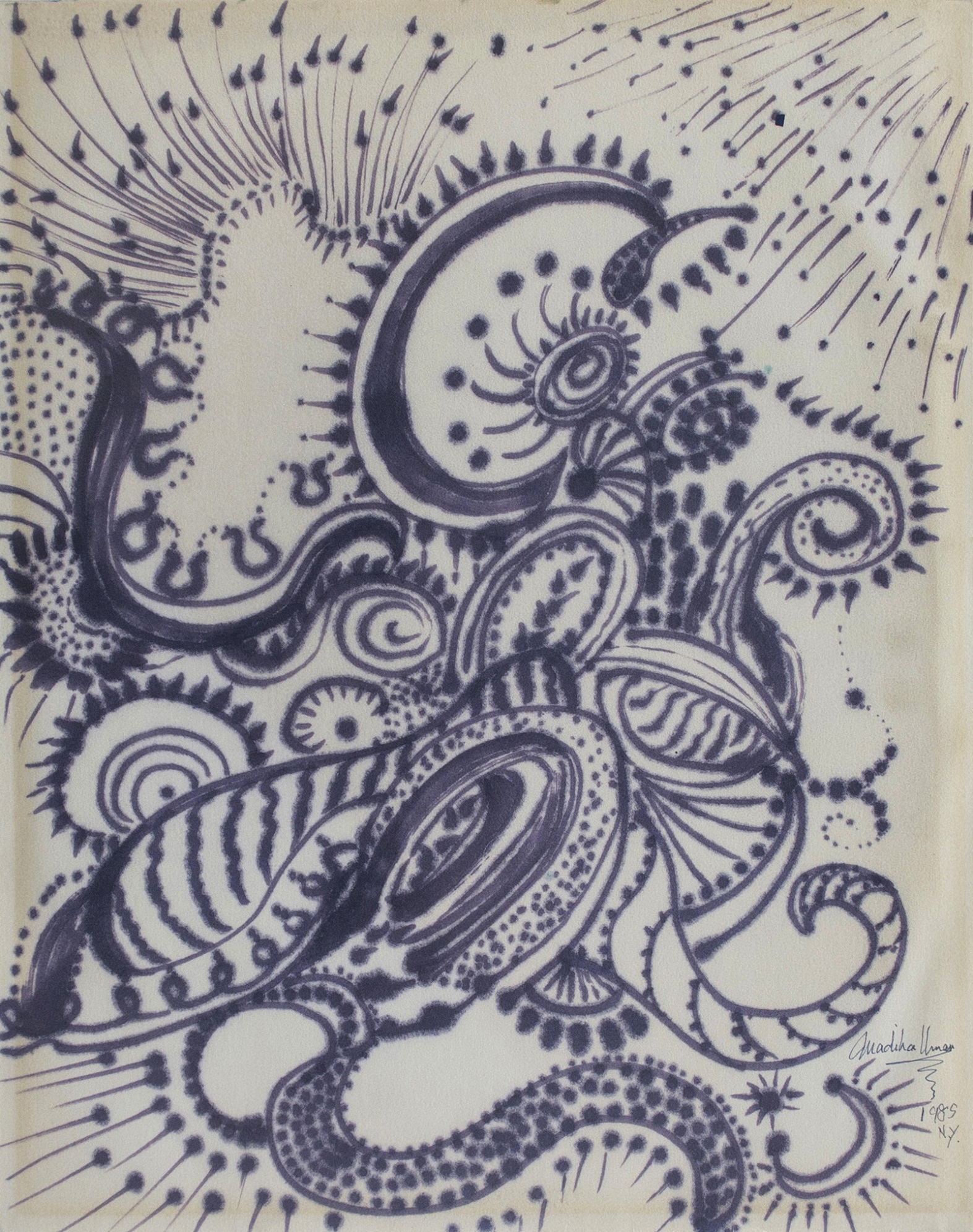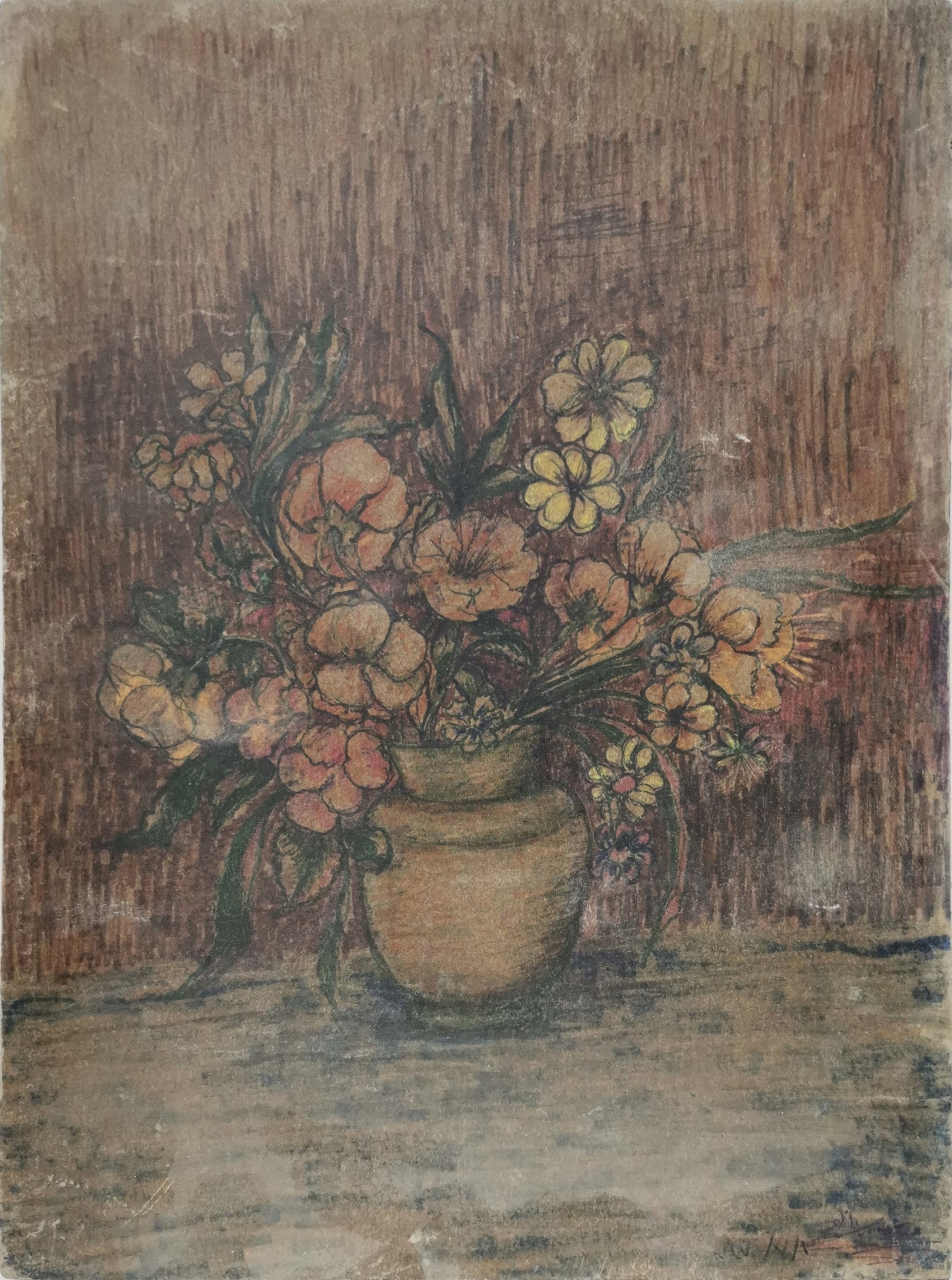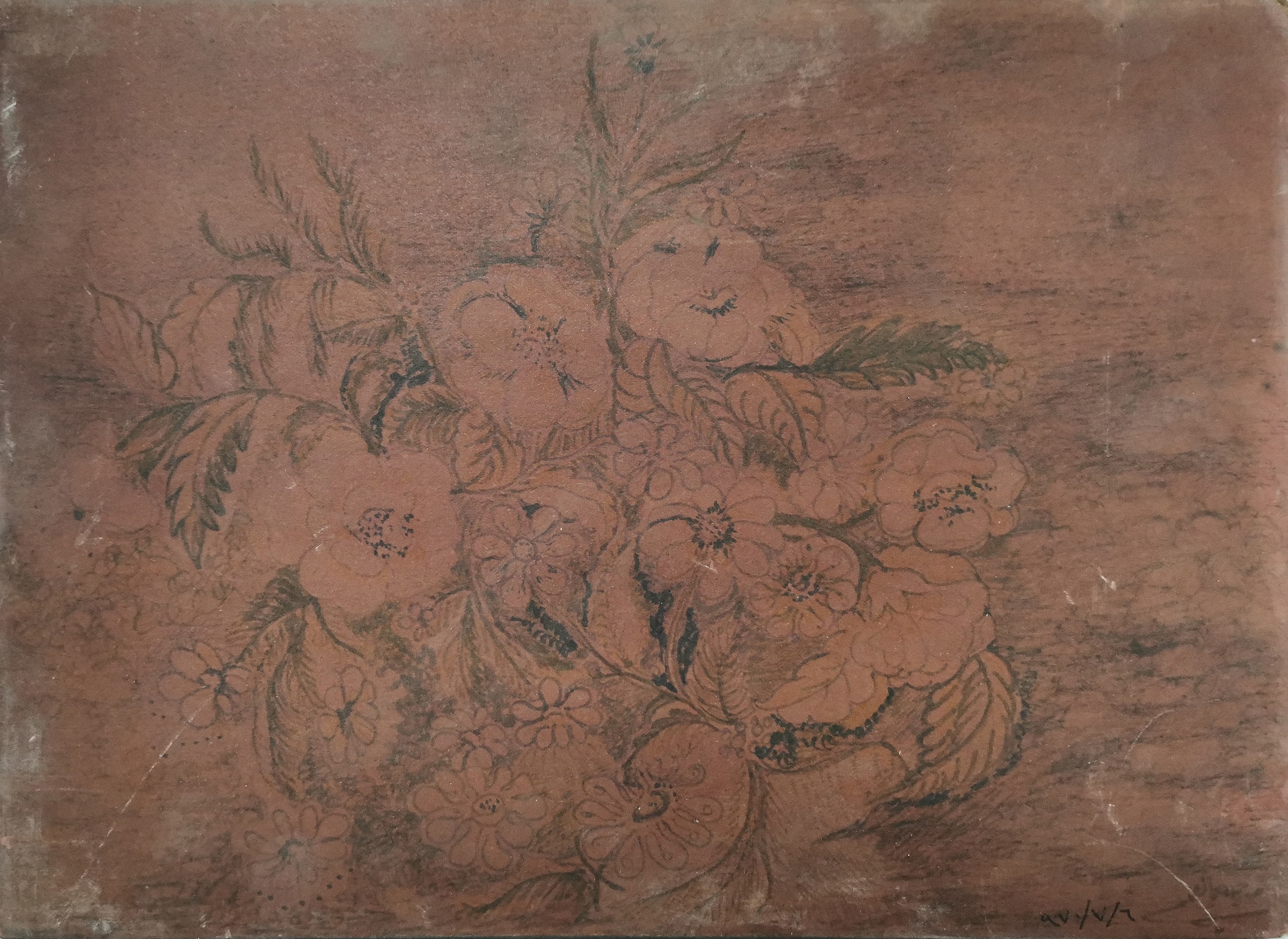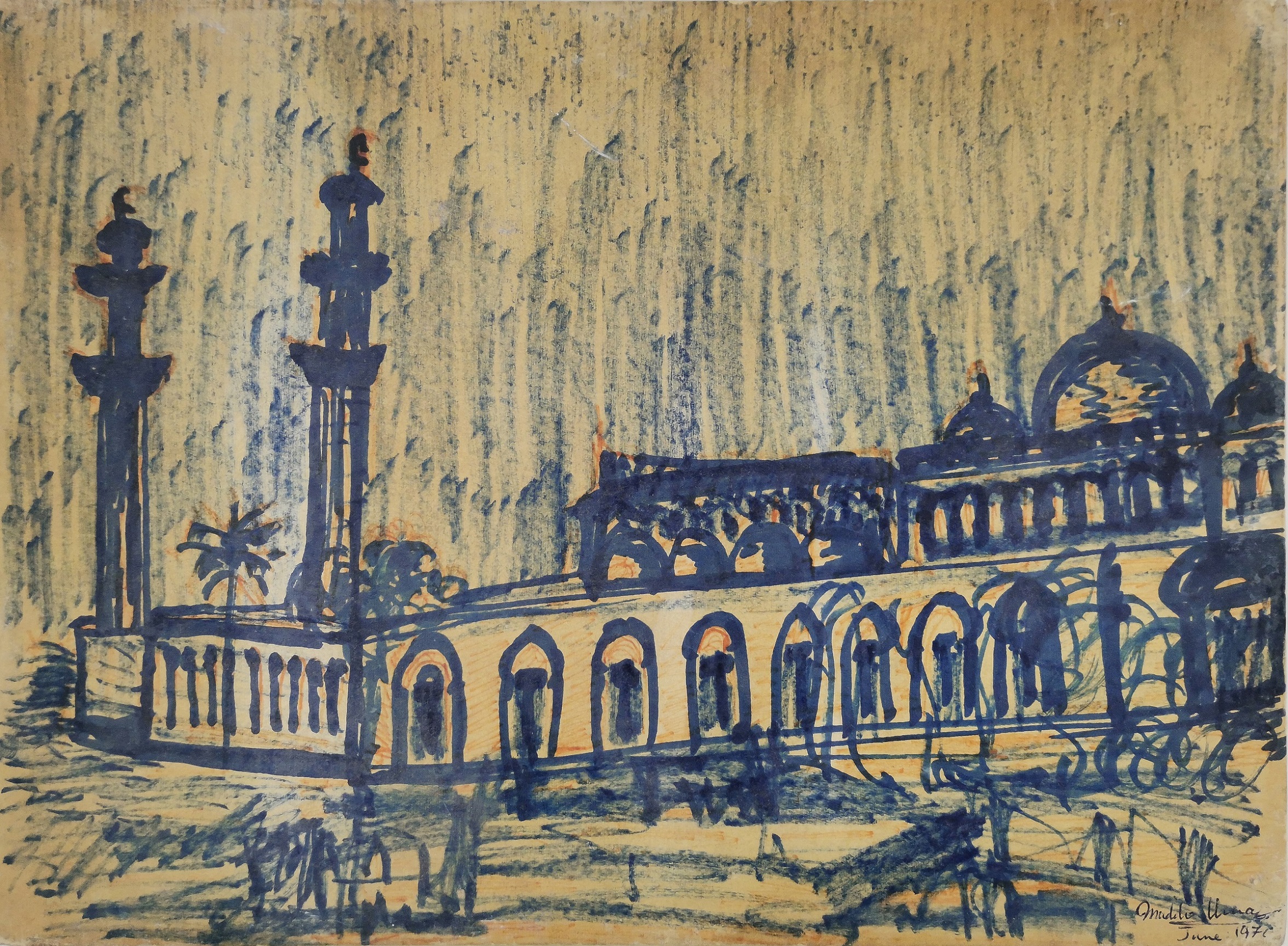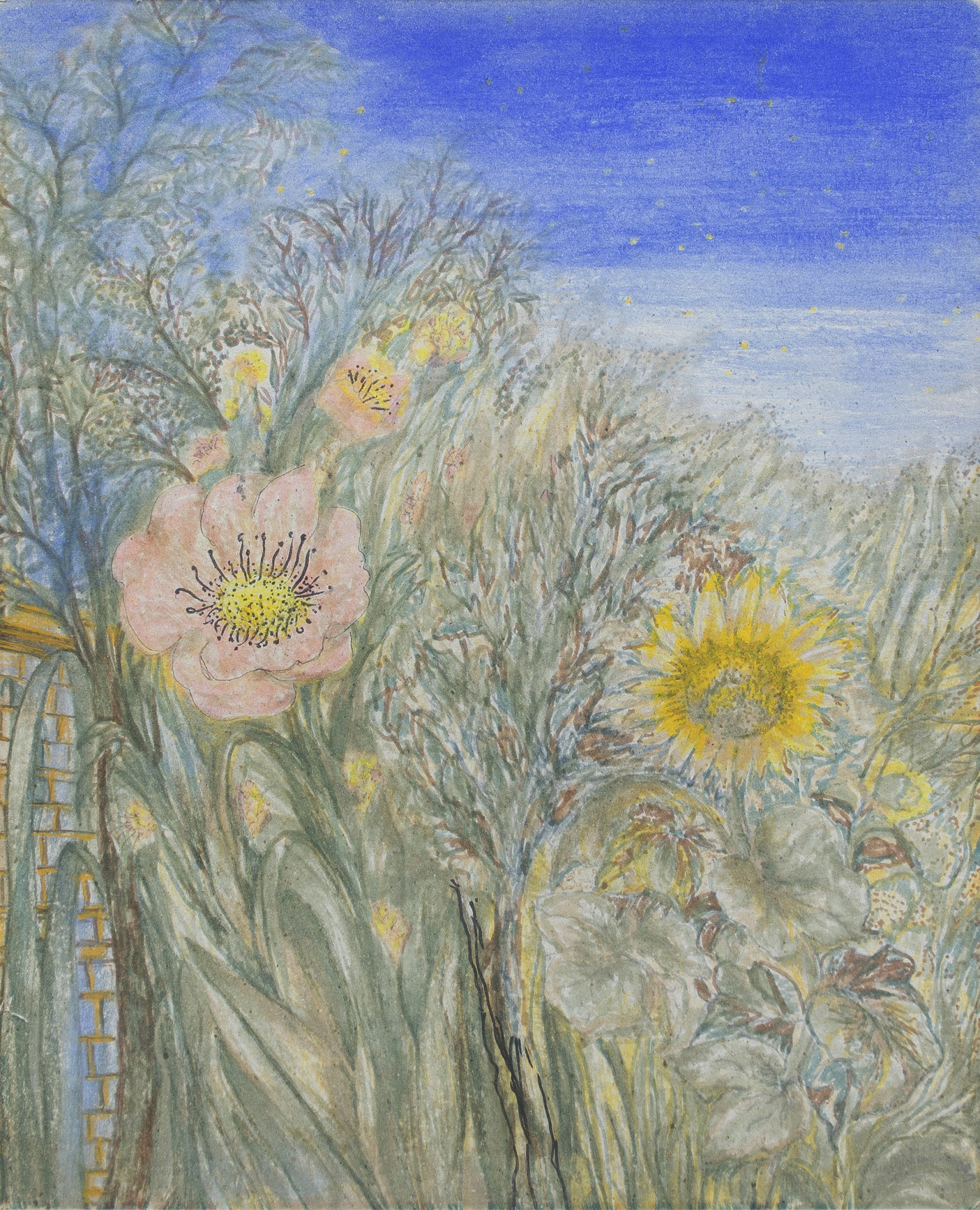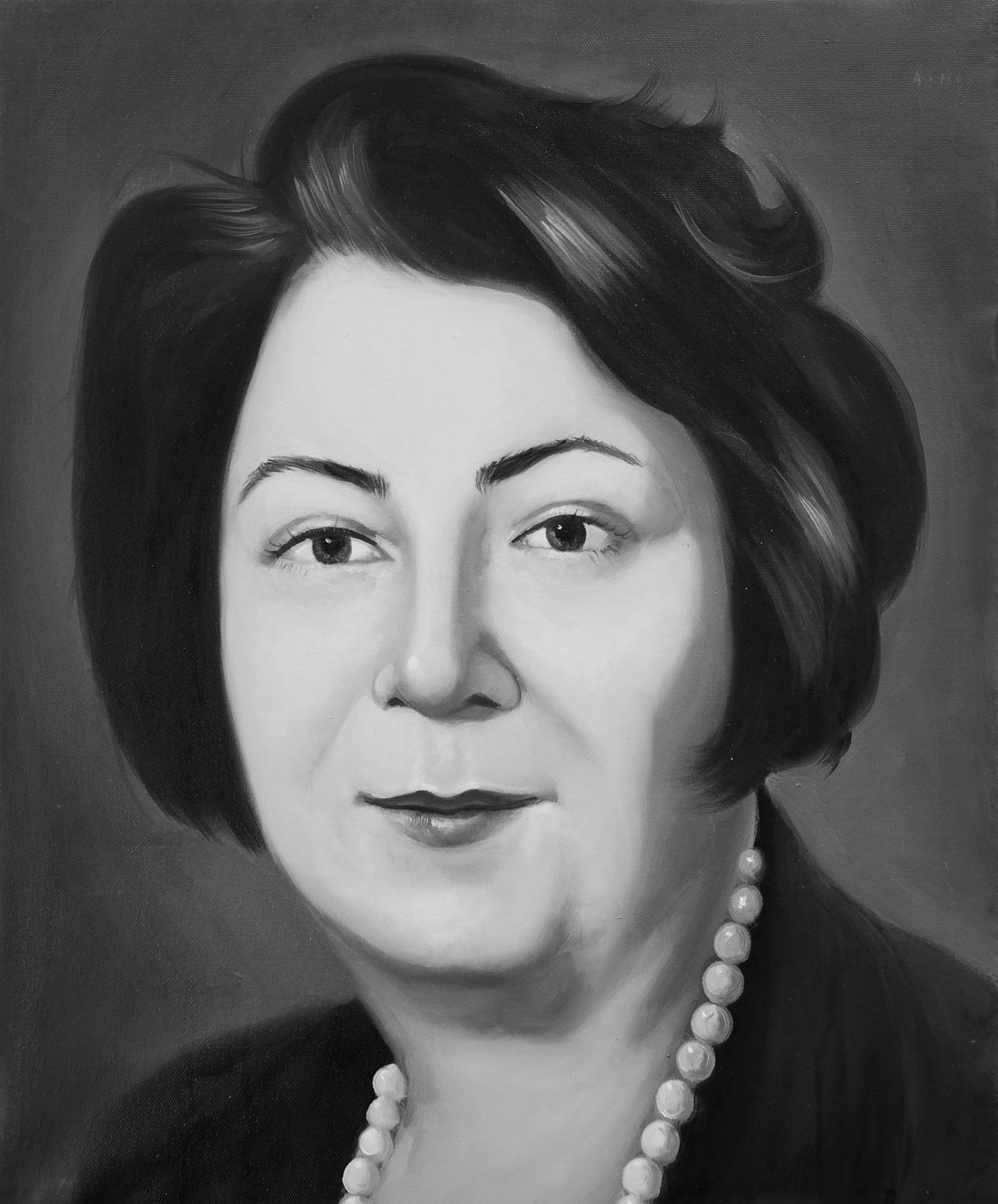
- 1908 Madiha Umar was born in the province of Aleppo, which is located in northern Syria, from a Syrian mother and a Circassian father. When Madiha was a young girl, her family moved to Iraq and then she studied in Istanbul at a school called Al-Sultania School. For her artistic skill, she attracted the attention of a well-known Turkish artist named Hoja Ali Reza.
- 1933 She graduated with honors in arts and crafts from London and trained to be a teacher at Maria Grey Training College in London with a fellowship by the Iraqi government where she is considered the first artist from Iraq to receive such fellowship.
- 1939 Her full name is Madiha Hassan Tahsin, but after her marriage this year to the Iraqi diplomat Yassin Umar, she took his family name ‘Umar’. So, she became known as Madiha Umar and start giving lectures in the Institute of Fine Arts in Baghdad.
- 1941 She acquired Iraqi citizenship, and after her husband was appointed member of the Iraqi mission, she left lecturing in the IFA. Madiha Umar traveled with her husband to Washington DC in the United States and held her first solo exhibition there. She was searching in the Washington libraries for Arabic calligraphy and found a book by the Islamic scholar, Nabia Abbott, which opened the way for her to deepen her research by stripping the Arabic letter and exploring the possibilities of merging Arabic letters with artistic works in the 1940s, in what would later be called the ‘Hurufiyya Movement’.
- 1944 She became known as the first female artist to abstract Arabic calligraphy and integrate it into her artistic works, from this early period. She was of two artist used Arabic Letters in their art work and considered the pioneers of Arabic Hurufiyya, the other artist is Jamil Hamoudi.
- 1947 She won the Honorary Prize from Corcoran School of Arts.
- 1948 She participated in a watercolor exhibition at the National Museum of Natural History, at the Smithsonian Institution in Washington, DC.
- 1949 She held a solo exhibition at Georgetown University Library in Washington. She also participated in the annual exhibition at the Corcoran Museum, by displaying an abstract painting and calligraphy. She also participated in the Jane Gallery in Silver Spring, Maryland. In the same year, with the support of American art historian Richard Ettinghausen*, she worked on a group of artworks in this manner and set up an exhibition in which she displayed a series of 22 paintings inspired by her writing at the George Town Public Library in Washington. Therefore, she is considered as the first Arab artist in the modern era to include Arabic letters in her art, and the first artist to have exhibited such works. For this reason, she was widely recognized as a pioneer of the Hurufiyya movement. Also, in the same year, she wrote a book called “Arabic Calligraphy: An Inspiration Element in Abstract Art".
- November 22 - December 17, 1950 She held a solo exhibition entitled "Watercolor and Drawings" at the San Francisco Museum of Modern Art in California, as well as another exhibition in Washington at the Arts Club.
- 1951 She held a solo exhibition at the San Francisco Museum of Modern Art in California.
- 1951 She participated in the International Orientalist Conference at the University of Istanbul in Turkey.
- 1952 She graduated from George Washington University and completed her studies of fine arts at Corcoran School of Arts and participated in the art exhibition of Ibn Sina Festival in Baghdad in which she displayed 48 paintings.
- 1954 She held a solo exhibition at the Fritz Gallery in Beirut, Lebanon.
- 1955 She participated in a group exhibition of painting and sculpture at the UNESCO Hall in Beirut, Lebanon.
- 1957 She participated in the Iraqi Contemporary Art Exhibition.
- 1958 She held a solo exhibition at the Garden Gallery at the Middle East Institute in Washington, DC. She also participated in a group exhibition of the diplomatic wives of T.F.A. Gallery. in Washington, D.C.
- 1959 She earned her master’s degree in visual arts from the Corcoran School of Arts.
- 1960 She participated in an exhibition of Arab artists at the Middle East Institute in Washington, D.C.
- 1961 She held a solo exhibition at the University Alumni Club in Washington, DC.
- 1962 She held a solo exhibition at the Friends of the Middle East Institute in New York.
- 1968 She held a solo exhibition at the National Museum of Modern Art in Baghdad and also participated in a group exhibition of visual artists at the National Museum of Modern Art in Baghdad.
- She held a solo exhibition at the Turkish Cultural Center in Baghdad.
- 1971 She participated in a group exhibition at the National Museum of Modern Art in Baghdad and, in the same year, the artist Shaker Hassan Al Said founded the One Dimension Group to which Madiha Umar joined.
- 1973 She participated in the second exhibition of the One-Dimensional group in Baghdad.
- 1981 The Ministry of Culture and Media organized a comprehensive honoring exhibition at Al-Riwaq Hall in Baghdad. She participated in the Arabic Calligraphy Exhibition in Modern Art at the Iraqi Cultural Center, in London.
- 1988 She held a last exhibition in Baghdad, in which she exhibited more than 136 paintings representing her career over more than half a century, starting from 1931 to date.
- 1994 She participated in a group exhibition entitled “Forces of Change: Arab Women Artists” at the National Museum of Women in the Arts in Washington, DC.
- 2000 - 2002 She participated in a group exhibition entitled “Blows of Ingenuity: Contemporary Iraqi Art” at the Brunei Gallery in London.
- Voice of America and the BBC conducted several radio interviews with her.
- 2005 The artist passed away in Amman, Jordan at the age of ninety-seven years.
- 2006 Her works were displayed in an exhibition entitled "A Scientist in Art" at the British Museum in London.
- 2009 Her works were displayed in an exhibition entitled “Modernity and Iraq” at the Wallach Gallery at Columbia University in New York.
*Richard Ettinghausen (February 5, 1906 – April 2, 1979)[1] Princeton, New Jersey was a German-American historian of Islamic art and chief curator of the Freer Gallery.